

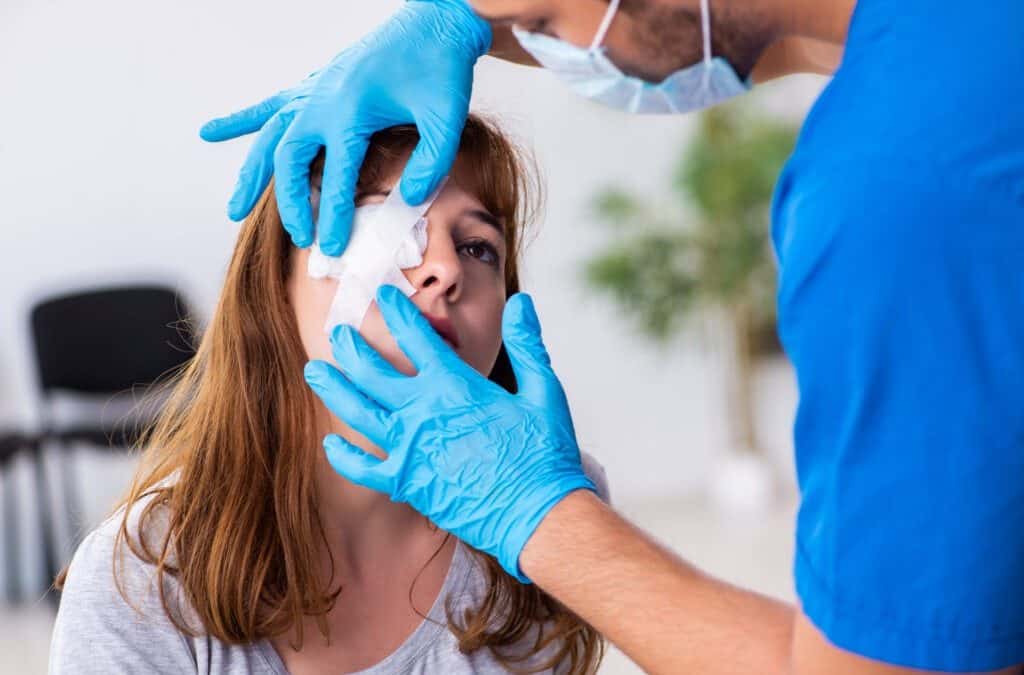
Quick Overview: Eye injuries can happen in seconds, but the actions you take immediately can make a big difference. This blog explains how to respond to common eye injuries at home or work, when to seek emergency eye care, and which warning signs should never be ignored. It also shares simple prevention tips to help protect your vision every day.
Every second counts when an eye injury happens. A splash of chemicals, a flying piece of debris, or even an accidental poke can turn into a serious vision problem if you do not act quickly. While some eye injuries are minor, others require immediate medical attention to help prevent lasting damage. Knowing the right first-aid steps can protect your eyesight and improve the chances of a full recovery.
If you are searching for ‘best emergency eye care near me”, don’t wait to see if the problem gets better. Quick action and prompt professional care can make all the difference.
Stay Calm and Protect Your Eye
An eye injury can be frightening, but your first few actions matter.
Avoid rubbing or pressing on the injured eye. Even if something feels trapped inside, rubbing can make the injury worse. If you wear contact lenses, leave them in place unless your eye doctor tells you otherwise. Removing them incorrectly may increase irritation or cause more damage.
If possible, ask someone to help you get medical attention, especially if your vision is affected.
Know the Type of Eye Injury
Different eye injuries need different first-aid steps.
1. Chemical Splash
Cleaning products, paint, fertilizers, and other chemicals can seriously damage the eye. Immediately rinse your eye with clean, lukewarm water for at least 15 to 20 minutes. Hold your eyelid open while flushing the eye. Do not wait to see if the pain improves before seeking medical care.
2. Something Stuck in the Eye
Dust, wood chips, metal particles, or sand may become trapped on the surface of the eye. Blink several times to encourage natural tears to wash away small particles. If the object remains, do not rub your eye or try to remove it with tweezers, cotton swabs, or your fingers. Cover the eye loosely if needed and seek prompt evaluation.
3. A Blow to the Eye
A ball, tool, or accidental hit can cause swelling, bruising, or damage inside the eye. Apply a cold compress gently around the eye without placing pressure directly on the eyeball. If you notice blurred vision, severe pain, double vision, or bleeding, seek immediate medical attention.
4. Cuts or Puncture Injuries
Sharp objects can cause serious eye injuries. Do not rinse the eye or try to remove any object stuck in it. Avoid putting pressure on the eye. Protect it with a loose shield, if available, and go to the nearest emergency department immediately.
Warning Signs You Should Never Ignore
Some symptoms suggest a serious eye injury that requires urgent care.
Seek immediate medical attention if you notice:
- Sudden vision loss
- Blurred or double vision
- Severe eye pain
- Persistent bleeding
- A chemical burn
- An object stuck in the eye
- Flashes of light or a sudden increase in floaters
- A cut or puncture wound
- Difficulty opening the eye
These symptoms should never be ignored because delays can increase the risk of permanent vision loss.
What Not to Do After an Eye Injury
Many people accidentally make an eye injury worse by trying home remedies first.
Avoid rubbing your eye, using sharp tools to remove debris, placing ice directly on the eyeball, or using eye drops unless recommended by an eye care professional. If an object has penetrated the eye, never attempt to remove it yourself.
Simple first aid is helpful, but proper medical evaluation is still important.
Why Prompt Eye Care Matters
Even injuries that seem minor can affect the cornea, retina, or other delicate structures inside the eye. A comprehensive eye examination allows your optometrist to check for scratches on the cornea, internal bleeding, increased eye pressure, retinal damage, or signs of infection. Early diagnosis often leads to better outcomes and reduces the risk of long-term complications.
Prompt evaluation is also an important part of the treatment and management of ocular disease, especially when an injury may increase the risk of infection, inflammation, or other vision-threatening conditions.
Can Eye Injuries Be Prevented?
Many eye injuries can be avoided with a few simple precautions.
Wear safety glasses when using power tools, mowing the lawn, handling chemicals, or completing home improvement projects. Protective eyewear is also important during sports and recreational activities that carry a risk of eye injury.
At home, keep cleaning products and chemicals safely stored and follow product instructions carefully. These simple habits can help protect your family’s eyesight.
Get the Right Care Without Delay
An eye injury should never be ignored, even if it seems minor at first. Quick action can help protect your vision and prevent more serious complications.
If you experience an eye injury in Tustin or nearby Orange County, contact Tustin Optometry as soon as possible for prompt evaluation and guidance. Our experienced team can assess many urgent eye concerns and recommend the most appropriate next steps based on your condition.
Visit Tustin Optometry at 13011 Newport Ave, #101, Tustin, CA 92780.
Office Hours
- Monday–Friday: 9:30 AM – 5:30 PM
- Saturday: Closed
If your eye injury involves severe vision loss, a chemical burn that continues after rinsing, or a penetrating injury, call 911 or go to the nearest emergency department immediately. Your eyesight is too important to wait.
FAQs
1. Should I rinse my eye after a chemical splash?
Yes. Flush your eye with clean, lukewarm water for at least 15 to 20 minutes, then seek emergency eye care as soon as possible.
2. Is it safe to remove something stuck in my eye?
No. Never use your fingers or tools to remove a foreign object. Doing so may worsen the injury and increase the risk of infection.
3. How do I know if my eye injury is serious?
Blurred vision, severe pain, bleeding, light sensitivity, flashes, floaters, or a cut to the eye all require immediate medical evaluation.
4. What should I do immediately after an eye injury?
Stay calm and avoid rubbing your eye. Depending on the injury, rinse with clean water if needed and seek prompt professional medical evaluation.
5. When should I seek emergency eye care?
Get emergency eye care right away if you have severe eye pain, sudden vision loss, chemical exposure, bleeding, or an object stuck in your eye.
Recent Comments