

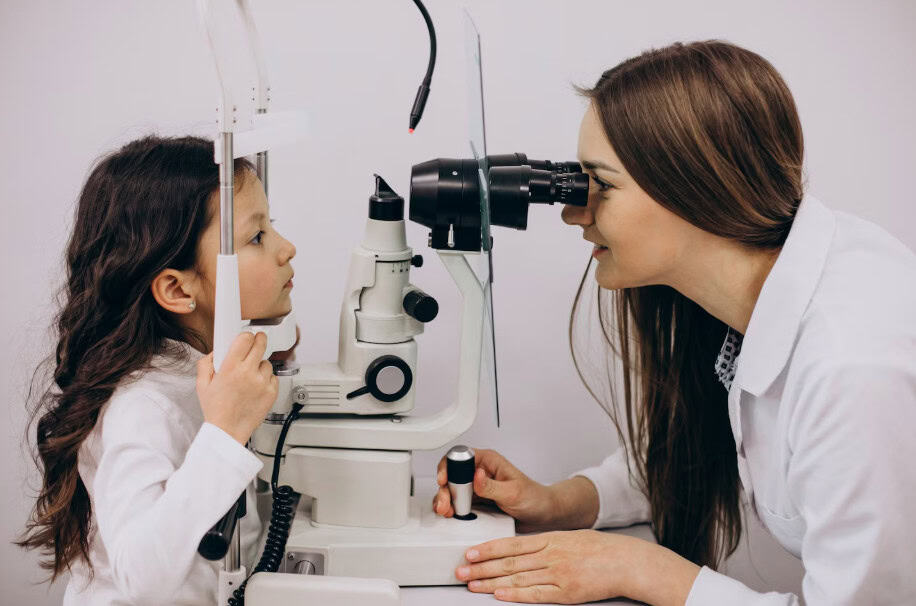
Did you know that most classroom learning depends on vision? Experts often say nearly 80% of what children learn in school is visual. Think about it. Reading books, watching the board, looking at diagrams, and writing notes all rely on clear eyesight.
That’s why regular children eye examination visits matter more than many parents realize. If a child cannot see clearly, learning becomes harder. The tricky part? Many kids don’t know their vision is blurry. They simply assume everyone sees the same way.
So let’s talk about how early checks help spot problems before they start affecting school performance.
- Clear Vision Helps Children Read Better
Reading is one of the biggest parts of school. But if letters look blurry or move on the page, reading becomes tiring. Children may lose interest or read slowly.
Eye exams check for common vision issues like nearsightedness or farsightedness. When these problems are corrected, reading becomes much easier and more comfortable.
- Better Focus in Class
Have you ever noticed a child losing focus during lessons? Sometimes it isn’t about attention. It could be about vision.
When the eyes struggle to focus, the brain has to work harder. This can make children look distracted. Eye exams evaluate focusing ability and help identify issues that affect concentration.
- Early Detection of Vision Problems
Many eye conditions develop quietly. Children might not complain because they think their vision is normal.
A routine children eye examination can detect problems like amblyopia, often called lazy eye, or strabismus, where the eyes are not aligned properly. Early detection allows treatment to begin when it works best.
- Stronger Hand–Eye Coordination
School activities involve more than reading. Kids write, draw, cut paper, and use tools in art or science classes.
All these tasks rely on hand–eye coordination. Eye exams check how both eyes work together, which helps improve coordination during daily classroom activities.
- Less Eye Strain from Screens
Children today spend more time looking at digital screens. Homework, online lessons, and educational games all involve devices.
Too much screen time can cause eye fatigue. During an exam, doctors can identify signs of strain and guide parents on simple steps that help protect children’s eyes.
- More Confidence in the Classroom
Imagine trying to answer a question when you can’t clearly see the board. That situation can make children feel unsure.
When vision improves, children often feel more confident. They participate more in class and engage better with teachers and classmates.
- Better Attention to Details
Learning often involves small details. Think about reading instructions, studying maps, or looking at science diagrams.
Clear vision helps children notice these details easily. Eye exams ensure that visual clarity supports these important classroom skills.
- Support During Early School Years
The early years of school are very important for visual development. This is why eye tests for 5 year olds are often recommended when children start school.
These exams check how well the eyes focus, move, and work together. Identifying concerns early helps prevent learning challenges later.
- Fewer Headaches and Tired Eyes
Children may not always explain when their eyes feel tired. Instead, they might rub their eyes, avoid reading, or complain about headaches.
Vision problems can often be the cause. Eye exams help identify these issues and reduce discomfort during schoolwork.
- Healthy Eyes for the Future
Eye exams don’t just check vision. Doctors also examine overall eye health. They look at the retina, optic nerve, and eye movement.
Clinics like Tustin Optometry offer comprehensive exams that evaluate both vision and eye health. These checkups help ensure that children’s eyes develop normally.
Helping Your Child See and Learn with Confidence
Children often don’t realize when their vision is not clear. They simply adjust. That’s why regular children eye examination visits are so important for school-age kids. Early screenings, such as eye tests for 5 year olds help detect vision issues before they affect reading, attention, and classroom performance.
Tustin Optometry provides comprehensive eye exams designed to check visual clarity, eye alignment, and overall eye health. Giving your child clear vision can make learning easier and more enjoyable. Book an appointment today and help your child stay confident and focused in school.
Questions You Might Have
Q: At what age should children start having eye exams?
A: Many eye care professionals recommend the first comprehensive eye exam before a child starts school. Early exams help identify vision issues during important developmental years.
Q: Are eye tests for 5 year olds really necessary?
A: Yes. Eye tests for 5 year olds are often recommended because children begin school around this age. These tests check visual clarity, focusing ability, and eye coordination to ensure children are ready for classroom learning.
Q: Can vision problems affect a child’s academic performance?
A: Yes. When children cannot see clearly, they may struggle with reading, writing, and focusing in class. Correcting vision problems can improve both learning and classroom participation.
Q: Do children always need glasses if a vision problem is found?
A: Not always. Some conditions require glasses, while others may need monitoring or different types of treatment depending on the diagnosis.
Q: How can parents support healthy vision for their children?
A: Encouraging regular eye exams, limiting excessive screen time, ensuring good lighting during reading, and promoting outdoor activities can help maintain healthy vision.
Recent Comments